When most people picture addiction treatment, they imagine one-on-one sessions with a therapist. And while individual therapy absolutely has its place, group therapy is often the centerpiece of effective outpatient addiction treatment. If you or someone you love is considering treatment, understanding what group therapy involves and why it works can help you make a more informed decision about the path forward. It can also help set realistic expectations for what the experience actually feels like, which makes it easier to walk through the door for the first time.
What Is Group Therapy?
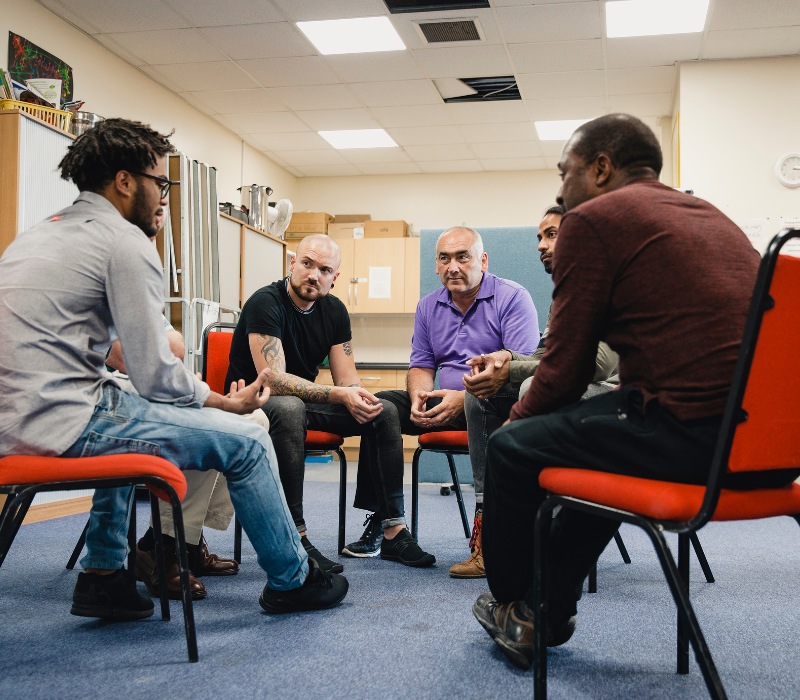
Group therapy is a structured therapeutic format in which a licensed clinician facilitates sessions with multiple clients at the same time, typically between six and twelve participants. These sessions are not informal support groups or peer-led meetings. They are professionally guided therapeutic environments where participants work through specific clinical goals using evidence-based approaches. The clinician sets the agenda, manages the dynamics of the group, and ensures that every session moves toward therapeutic outcomes rather than simply providing a space for venting or socializing.
There is an important distinction between group therapy and peer support groups like Alcoholics Anonymous or SMART Recovery. Both serve valuable roles in recovery, but they are not the same thing. Peer support groups are participant-led and follow a community-based model. Group therapy is clinician-led, clinically structured, and integrated into a broader treatment plan. The two can and often do complement each other, but they address recovery from different angles.
In addiction treatment, group therapy is often delivered through intensive outpatient programs and partial hospitalization programs, where clients attend multiple sessions per week while continuing to live at home or in sober housing. At Bridge of Hope, our outpatient programs are built around group therapy as a primary treatment modality, supported by individual sessions and comprehensive clinical planning.
How Does Group Therapy Work?
Each group therapy session is guided by a licensed therapist who sets the agenda, facilitates discussion, and ensures the environment stays safe and productive. Sessions may follow specific modalities such as Cognitive Behavioral Therapy (CBT), Dialectical Behavior Therapy (DBT), motivational interviewing, or trauma-informed approaches, depending on the group’s focus and the needs of participants. The therapist is not simply a moderator. They are actively observing dynamics, drawing out quieter members, redirecting unproductive patterns, and steering the conversation toward insight and skill-building.
Common group formats in addiction treatment include process groups, where participants share experiences and receive feedback from peers and the therapist; psychoeducational groups, which teach specific skills like relapse prevention or emotional regulation; and skills-based groups focused on communication, coping strategies, and rebuilding daily structure. Different formats serve different purposes, and most treatment programs use a combination across the week to address different dimensions of recovery.
Why Group Therapy Is So Effective for Addiction
The research on group therapy in addiction treatment is compelling. A meta-analysis in the Journal of Substance Abuse Treatment found that clients who participated in group-based treatment showed comparable or superior outcomes to those receiving only individual therapy, with significantly higher rates of sustained sobriety at follow-up.

Part of what makes group therapy so powerful is the sense of shared experience. Addiction is deeply isolating. The shame and secrecy that often surround it can make a person feel uniquely broken, as though no one could possibly understand what they have been through. Sitting in a room with others who genuinely do understand, who have lived through similar patterns and made similar choices, can begin to dismantle that shame in a way that no individual session fully replicates.
There is also something uniquely powerful about witnessing recovery in real time. Hearing someone else articulate what you have been unable to put into words, or watching a peer make meaningful progress on something you are still working through, creates a kind of hope that is difficult to manufacture in other settings. That hope is not abstract. It is grounded in evidence that sits across the room from you every session.
The Role of Accountability
Group therapy also introduces a healthy layer of accountability that is different from what any individual relationship can provide. When you commit to goals in front of peers who are working through similar challenges, the motivation to follow through increases meaningfully. You are not just reporting back to a therapist. You are returning to a group of people who remember what you said last week and who are invested in your progress because they are invested in their own.
Research published in Substance Abuse Treatment, Prevention, and Policy found that social support within structured treatment groups was one of the strongest predictors of long-term recovery outcomes. The relationships formed in group therapy matter beyond the clinical hour.
Over time, many clients describe the group as one of the most important supports in their recovery, sometimes more so than any other element of their treatment plan. The connections formed in treatment often extend well beyond the program itself, becoming part of the social network that sustains sobriety in the years that follow.
What to Expect When You Start
It is normal to feel nervous about joining a group therapy program, especially if you have never done it before. Many people worry about having to share personal information with strangers, or fear being judged by others in the room. In practice, most clients describe feeling relieved after their first few sessions. The shared context of the group creates a level of mutual understanding and implicit agreement that makes openness feel safer than expected.
You do not have to share everything immediately. Part of the therapeutic process is learning to trust the group gradually, and a skilled clinician will create conditions that make that trust feel earned rather than forced. Most people find that the more they put into the group, the more they get out of it, but that process unfolds at its own pace.
At Bridge of Hope, our groups are led by experienced clinicians and structured to support clients at different stages of recovery. We also offer sober housing and case management and peer support for clients who need more comprehensive wraparound services alongside their outpatient treatment.
Taking the First Step
If you are ready to explore outpatient addiction treatment in Portland, OR, Bridge of Hope is here to help. Our team is led by Berhanu Bedassa, PMHNP, and our programs are designed to meet you where you are, whether you are just starting out or working to maintain sobriety after a setback. We offer a range of treatment levels so you can receive the right intensity of support for where you are right now.
Contact us today to learn more about our substance use disorder treatment programs and find the path that works for you.